
Teaching a card game in five minutes

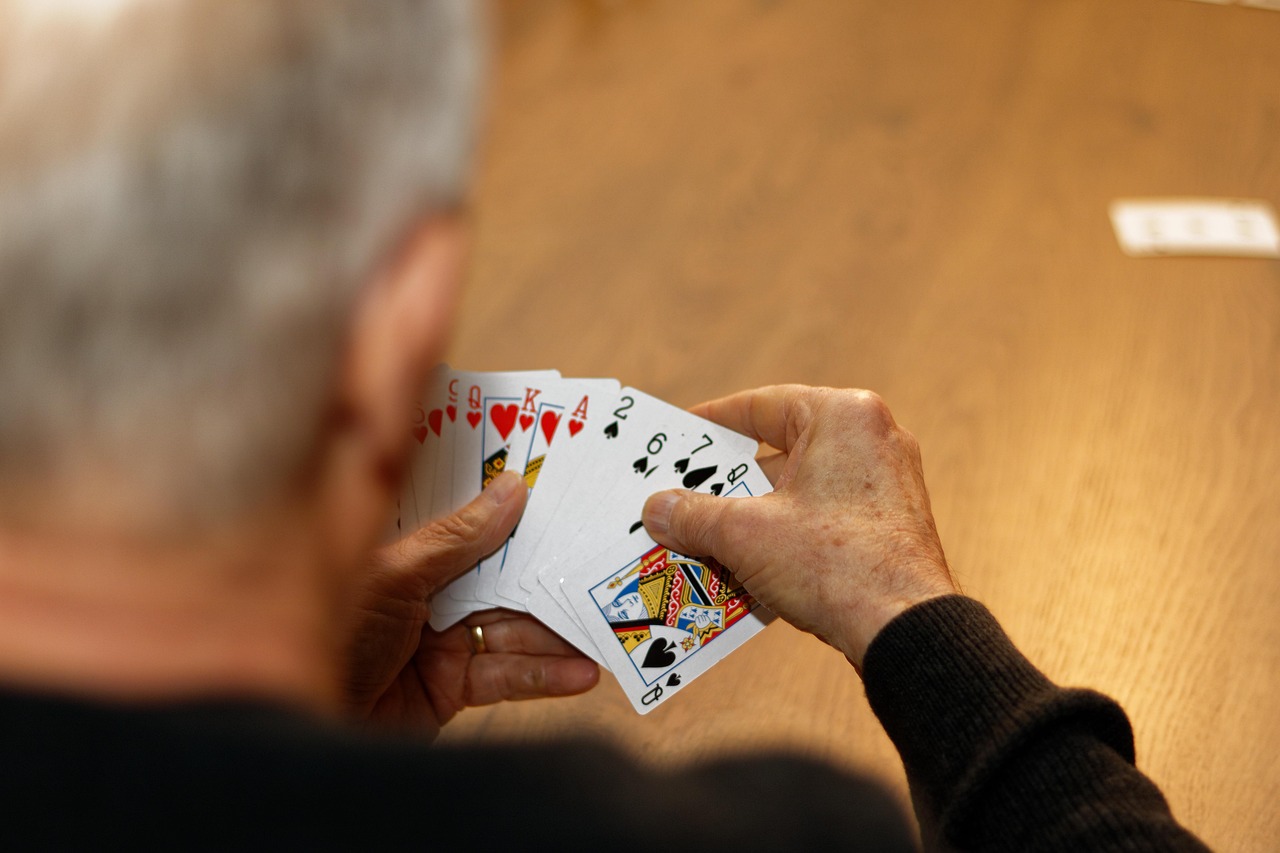
Teaching a card game in five minutes
Most bad rules explanations are not badly worded. They are in the wrong order. The rulebook is organised for reference — components, setup, turn structure, scoring, edge cases — and reading it aloud in that order is close to the worst possible sequence for a table waiting to play.
Here is an order that works, and why each step is where it is.
Start with how the game ends
The first sentence should be what winning looks like. “First person to empty their hand.” “Most points when the deck runs out.” “Whoever survives.” Everything after that has somewhere to attach itself.
Explaining mechanics before the goal is the single most common mistake, and it is why people nod along and then ask what they are trying to do.
Then the shape of a turn, in one sentence
“On your turn you play one card and draw one card.” That is usually the whole of it. Exceptions and special cases come later, or not at all — many can be introduced when they first arise.
If the turn cannot be described in a sentence, describe the most common turn and say so.
Deal before you finish explaining
People stop listening within about ninety seconds of not holding anything. Deal the hands as soon as the goal and the turn are clear, and continue explaining while everybody is looking at their cards.
Cards in hand turn an abstract explanation into a concrete one, and questions become specific instead of vague.
Skip the edge cases entirely
Do not explain what happens when the deck runs out, or the tie-breaker, or the rule for the card nobody has yet drawn. Those are lookups, not teaching. Explaining them costs attention now for information that may never be needed.
Say “there are a couple of special cards, I will explain them when they come up” and mean it.
Play the first hand face up
For a short game, an open first hand is the fastest teaching tool available. Everybody sees the reasoning, mistakes get corrected before they cost anything, and the second hand starts with everyone actually knowing how to play.
This costs one hand and saves an entire first game spent confused.
Name the cards as they appear
Introduce a special card the first time somebody draws it, not in advance. The rule attaches to the object in front of them, which is far stickier than a list read out five minutes earlier.
This is also how most people learn a game from a friend, which is why it feels natural.
Do not explain strategy
Telling new players the best line removes the part they would have enjoyed and makes the game feel like homework. Explain what is legal; let them find out what is good.
The exception is a move that is obviously terrible and irreversible, which is worth flagging once.
Keep the reference card visible
If the game includes player aids, put one in front of every player. If it does not, the back of the box often summarises turn structure. Anything that stops the table asking the teacher a question is worth having out.
This matters most in games with several possible actions.
Accept that the first game is a practice game
Say so at the start. It removes the stakes, it makes it fine to take a move back, and it turns the inevitable rules correction into a normal part of the evening rather than an argument.
Almost every game is better on the second play, and the first exists to get there.
Choosing games that make this easy
Some decks are simply built for this. One action a turn, information printed on the cards, a goal you can state in five words. Those are the ones that get played on weeknights and the ones we keep restocking.
They are mostly on the family card games and party and social games shelves.
If you want a recommendation
The counter is open late most days and will happily talk through what a specific group is likely to get on with — the number is on the contact page. There is more on group size in card games that work with two players, and delivery is on the shipping policy page.
Teaching children, and teaching adults
The two are not the same job. Children generally accept a rule without needing to know why it exists and will happily start playing before they understand the whole game, which makes learn-as-you-go teaching very effective. Adults tend to want the shape of the whole thing before committing to a first move, and will interrupt an explanation to ask about an edge case that has not arisen yet.
The way to handle the adult version is to answer the edge-case question with “that comes up rarely, I will tell you when it does” and carry on. It sounds dismissive and it is not — it is protecting the explanation from becoming a rules reading. With children the risk is the opposite: they will start playing so quickly that a scoring rule never gets mentioned. Say the scoring twice, once before and once after the first hand.